Metal Gate Installation in Austin, TX

Notes from the crew on metal gate installation in Austin, TX: choosing aluminum or steel, side yard and pool gates, and matching a new gate to the fence.

What We Cover

Metal Gate Installation in Austin, TX

A metal gate in Austin takes more abuse than it looks like it should. Summer sun bakes the finish, sprinklers soak the lower rail, and clay under the footing swells and shrinks with every wet spell and dry one. A crew that installs gates here learns to read the lot first: the soil, the fence it joins, the way the yard drains, and how often the gate gets opened.

Choosing the metal

Aluminum, galvanized steel and painted iron each behave differently. Aluminum is light and does not rust, so it suits wide leaves and damp yards along the Colorado River. Galvanized steel with a powder coat is stronger across a long span and handles the dry limestone toward the Texas Hill Country. Older iron still hangs in places around Travis County and is usually worth repairing.

Side yards and pool gates

The tightest jobs are side yards between bungalows in Hyde Park, Clarksville and Bouldin Creek, where a meter or an air handler decides which way the leaf can swing. Pool gates are a separate trade inside the trade: a self-latching hinge, a high latch and hardware that survives chlorine, whether the yard sits near Zilker Park or on a hill above Barton Springs Pool.

Matching the fence

A new gate that does not match its fence looks like an afterthought. Rail height, picket spacing, post rhythm and color all come from the existing run, and a street in Tarrytown or Travis Heights shows how little room there is for error. Posts get set differently east and west of the Balcones Fault, deeper and belled in clay, drilled in limestone.

Guides

The pages here cover metal choice, galvanizing and powder coat, side yard fitting, pool gate hardware, fence matching and footings in Austin clay and limestone, written from the crew's side of the work.

Latest Guides

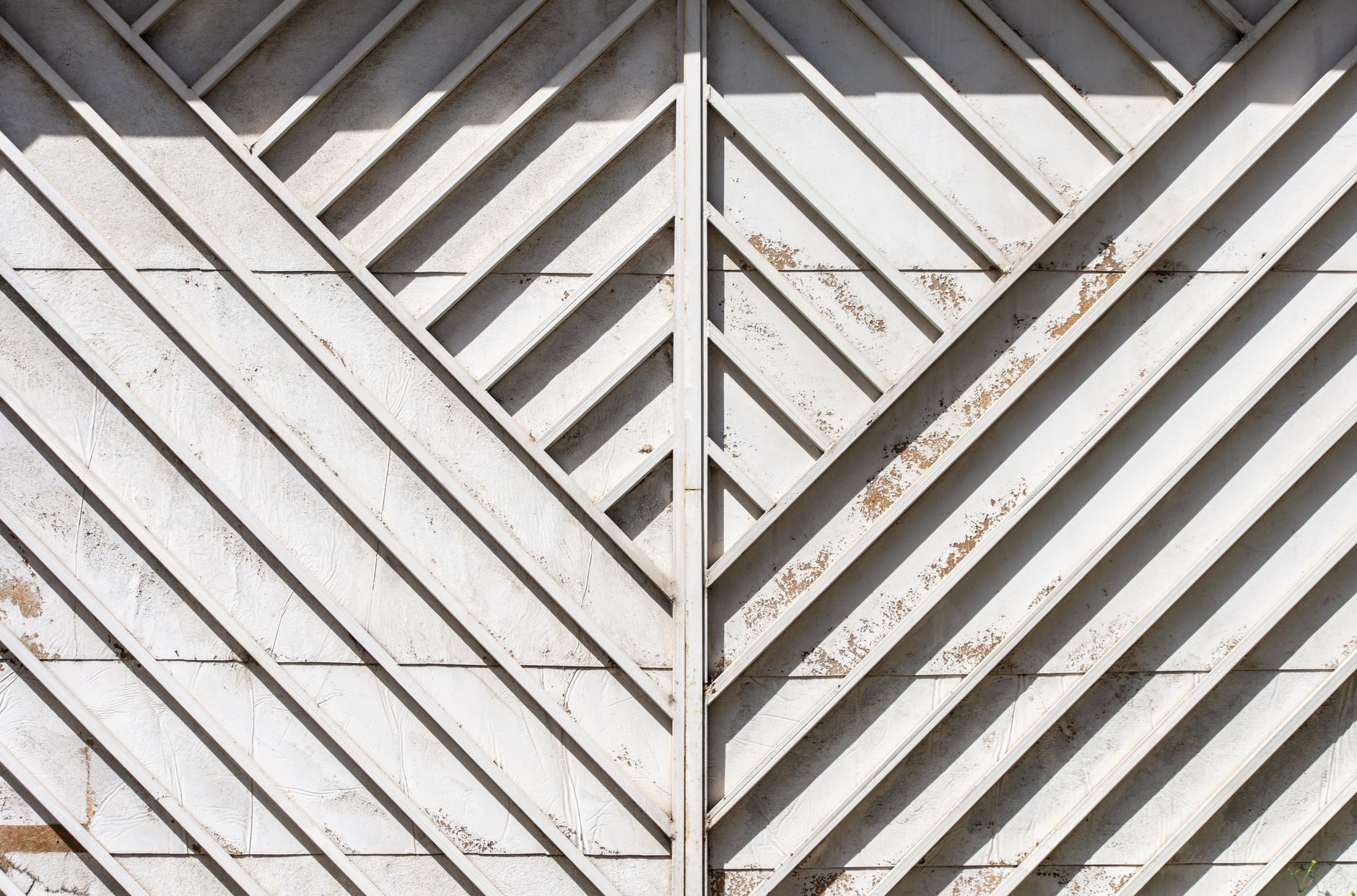
Close-up view of a weathered metal gate with geometric patterns and diagonal lines in Austin, TX

How to Hang a Metal Gate on a Sloped Austin Yard

2026-10-06

Flat ground is the exception on a residential lot in Austin. Yards in Travis Heights step down toward the Colorado River, streets near Mount Bonnell climb the first rise of the Texas Hill Country, and even the grid of Hyde Park carries a slow fall from one side of a yard to the other. A gate swings through an arc, and the ground under that arc rarely cooperates. The sequence below is the one a crew follows to hang a metal gate on uneven ground, and it covers what changes when the metal is aluminum, galvanized steel or iron.

Why does a slope change how a gate is built?

A gate frame is a rectangle. Sloped ground is not. When the leaf swings, its bottom rail travels across ground that rises or falls, so either the rail clears the high spot and leaves a gap at the low end, or it scrapes. The gap matters most on a side yard or pool gate, where nothing is supposed to fit underneath. The scrape matters most on a driveway gate that gets used daily, because grit and gravel collect right where the rail drags.

The fence beside the gate faces the same problem and has already solved it one way or another. Wood panels step down in level sections. Iron and aluminum panels usually rack, which means the pickets stay plumb while the top and bottom rails follow the ground. A new gate has to pick the same answer, or it will look like it belongs to a different fence.

What are the ways to hang a gate on a slope?

ApproachHow it worksFits bestWatch for
Racked frameThe rails are cut at an angle so the frame follows the grade while the pickets stay plumbIron or aluminum fences that already rackLatch and hinge hardware must sit square to the posts, not to the slope
Stepped top railThe top stays level and the bottom rail is cut to follow the ground in short stepsWood fences that stepSteps need clean edges, and the latch should sit on a level run
Rising hingeA cam or spiral hinge lifts the leaf as it opens so it clears the ground uphillSingle swing gates opening toward the high sideThe hinge post takes extra load, and the gate drops back each time it closes
Graded groundThe soil or paving under the arc is cut or filled to make a level stripWide driveway gatesWater follows the cut, so drainage has to be planned
Slide or cantilever gateThe leaf moves sideways on a track or overhangs on rollers, so it never sweeps an arcLong driveways on a steep fallThe track needs a level footing, and an operator adds its own requirements

Most side yard gates in older neighborhoods use a racked frame or a rising hinge. A driveway gate on a steep lot is where grading or a slide gate comes up.

Does the metal change the answer?

Racking is done at the joints in the shop, and any metal can be cut and welded to an angle. What changes is the weight and what happens to it after install.

Aluminum leaves are light, so a rising hinge lifts them easily and a smaller post can carry the load. The frame is cut and welded with extra care, because thin aluminum tubing moves when it gets hot and a rushed weld pulls the pickets out of line. Galvanized steel is heavier and stiffer. It holds a racked shape well on a long leaf, though the hinge and post have to be sized for it, and every cut and weld on a racked frame removes zinc that has to be restored. Old iron, still hanging on some lots in Clarksville and Tarrytown, is heavier again and often too far gone to be racked at all. A crew repairing it usually keeps the existing geometry and fixes the ground instead.

Powder coat goes on after the frame is cut and welded. A racked frame has more angled cuts than a plain rectangle, so there are more edges for the coat to wrap, and a careful finisher checks each one.

How does a crew find the swing path?

The method is simple and nobody should skip it. With the posts set or marked, a crew stretches a string from the hinge across the full arc at the height of the bottom rail, then walks it from closed to open. Wherever the string would touch ground, the ground is the problem. A level on a long straight board across the opening shows the fall from post to post, and a tape at the hinge post and the latch post shows how much the bottom rail has to rise or drop between them.

That string test shows whether a swing gate can open uphill without a rising hinge, and whether it will open at all on the low side if the yard falls away. Some yards fall in two directions, toward the street and toward the back fence, and those need the string run both ways.

How are the posts set on a slope?

A gate post stands plumb, never square to the slope. That sounds obvious until a post is dug on a steep bank and the eye keeps pulling it downhill. A crew sets the post with a level on two faces, and measures hole depth from the low side so the footing does not end up shallow where it matters.

Soil matters more on a slope than on flat ground. East of the Balcones Fault the clay swells in wet weather and creeps downhill a little with each season. West of it, near the limestone, a post is drilled into rock and holds steady, though the hole can slant if it meets a ledge. Water running across a slope washes soil away from the downhill side of a footing, so the top of the concrete is formed to shed water and a swale or a gravel strip is sometimes added uphill of the post.

How should a sloped gate line up with the fence next to it?

The gate and the fence should read as one run when seen from the street. If the fence racks, the gate racks at the same angle, with picket spacing carried straight through. If the fence steps, the gate steps at the same points, and the step on the gate lines up with a post on the fence rather than falling mid panel. The top line is checked from the street with a string pulled tight, since the eye catches a mismatch of even a small amount long before a tape does.

Color comes after geometry. A black powder coat on a new gate beside a sun faded fence reads too dark, and a short recoat of the nearest fence panels sometimes does more for the look than any adjustment to the gate itself.

What should be ready before the measuring visit?

  • A clear path along the line of the gate, with plants and stored items moved back
  • Any utility marks, meters or irrigation heads near the posts noted
  • The fence type and age, including whether it racks or steps
  • Which direction the gate should open, and what is behind it on both sides
  • Whether a pool barrier or an operator is part of the plan

With those answered, measuring takes a short visit and the swing path can be settled on the spot. A gate that is planned from the ground up rarely needs adjustment after it hangs.

Read more →

Detailed view of a light blue metal accordion gate with rust marks and texture in Austin, TX

Metal Gate Care Through an Austin Year

2026-10-06

A metal gate looks maintenance free until the first hot August, when a latch starts to stick and a hinge begins to groan. Austin gives a gate a hard year: months of sun that bake the finish, a few weeks of heavy rain that soak the ground around the posts, and the occasional freeze that nobody planned the hardware for. The questions below come up on side yards, pool gates and driveway gates around the city, and the answers are the ones a crew gives at the gate itself.

How often should a metal gate be looked over?

Twice a year is enough for most gates, once before the long summer and once after the wet months. A spring check catches anything that shifted over winter, and a fall check finds what the heat did. Pool gates earn a quicker look every month or two, since the latch is a safety part. The inspection takes minutes: open the gate fully, let it swing shut, and watch what the latch does.

What should be checked on the hinges?

Watch the hinge from the side while the gate opens and closes. A hinge that squeaks needs a small amount of lubricant on the pin, a drop of light oil or a dry film spray that does not collect grit. A hinge that wobbles has worn bushings or a loose post, and oil will not fix either. Look for rust stains running down from the hinge, since zinc or paint has often been worn off at the pivot and the bare steel is starting to rust. Bolt-on hinges should be tightened. Weld-on hinges should be checked for hairline cracks around the weld.

Why does a latch stop catching in summer?

Metal grows in heat. A steel leaf in direct afternoon sun gets longer, and a wooden or masonry post beside it can shift a hair, so a latch that caught on a cool morning misses the keeper by midafternoon. The fix is usually a slotted keeper that can be moved a fraction of an inch, or a latch with a wider catch. Dirt in the latch mechanism causes the same symptom, and so does a spring weakened by chlorine or sprinkler water. A pool gate that fails to latch once is not left alone, because the repair is quick and the failure is the one the gate exists to stop.

How does a galvanized or powder coated gate age?

Galvanized steel dulls and develops a matte gray surface as the zinc weathers. That is normal and it is the protection working. White powdery spots are zinc salts and wash off. Orange spots are rust and need attention.

Powder coat chalks under years of sun, especially dark colors, and the surface feels dry and slightly powdery when a hand is rubbed across it. Washing with mild soap and water and a soft brush removes the chalk and brings back most of the color. Chips are more serious. A chip exposes bare metal, and moisture creeps under the film from the edge. A small touch-up with matching paint, applied after the spot is cleaned and dried, slows that down until a full recoat is practical.

What does aluminum need?

Aluminum asks for the least. It cannot rust, so there are no orange stains to chase. Over time it can develop a pale oxide on bare spots, and the powder coat chalks the same way steel's does. Hinge pins and hardware are the parts that fail first, and they are often stainless steel or coated steel fitted to an aluminum leaf, so they get the same checks as any other gate.

What about sprinklers and the soil around the posts?

Water does more damage than weather. A sprinkler head that sprays the lower rail every morning keeps the finish wet for hours, and hard water leaves scale that dulls a gloss coat. Many yards near Zilker Park and in Bouldin Creek run in-ground irrigation along fence lines, and moving a head a few inches is a cheaper repair than a recoat. The soil under a post matters just as much. Clay expands and shrinks with moisture, so a post that stayed plumb through a dry spring can lean after a week of rain. A bubble level held against the post in spring and fall shows the lean before the gate begins to drag.

When is a gate worth repairing and when is it worth replacing?

Repair makes sense when the frame is straight, the welds are intact and the problem is hardware, a footing or a finish. Replacement makes sense when the frame is bent, the welds have cracked in several places, or the metal itself has rusted through at the joints. Old iron gates on streets in Clarksville and Tarrytown fall into a middle category, because the metal may be sound and worth keeping even when the hinges, latch and paint need to be redone. A crew that does repairs will usually say whether the frame has years left before suggesting anything bigger.

What seasonal routine works for a pool gate?

A pool gate gets a short routine on top of the twice-yearly check. Once a month, open the gate halfway and let go, then open it a quarter of the way and let go again, to check that it latches from both positions. Rinse the latch and keeper with a hose to clear chlorine residue and grit. Check the spring on a self-closing hinge, and replace it when the gate begins to close slowly. Near Barton Springs Pool and along the creeks that feed Lady Bird Lake, the air stays humid, so hardware near a pool wears faster than hardware on a dry side yard.

What should be done after a freeze or a flood?

Freezes are rare in Austin, but they happen, and a hinge packed with water can crack or stiffen when it freezes. After a hard freeze, open and close the gate gently and look for new gaps at the latch. After a heavy rain or a flood near the Colorado River, check the post footings, especially on lower lots, since saturated ground can move a post that has been steady for years. Mud packed around a sliding gate track should be cleared before the gate is run again.

What is a sensible small kit to keep at home?

  • A bubble level for the posts
  • A can of dry film lubricant for hinge pins and latches
  • A small jar of matching touch-up paint
  • A soft brush and mild soap for the finish
  • A wrench that fits the hinge bolts

That kit covers most of what a homeowner can do between visits from a crew. A gate that is looked over twice a year and kept dry at the base tends to run quietly for a long time.

Read more →